
Strengthening Families Program Activities: A Comprehensive Overview
The Strengthening Families Program (SFP) offers interactive sessions, uniting parents and youth for skill-building,
role-playing, and collaborative family projects, fostering stronger bonds and communication.
Program Origins and Development
The Strengthening Families Program (SFP) emerged from extensive research and a dedicated effort to bolster family resilience, initially spearheaded by Dr. Karol Kumfer. Its developmental journey began with a focus on preventing adolescent substance use and problem behaviors, recognizing the pivotal role families play in shaping youth development. Early iterations were rigorously tested and refined, incorporating feedback from families and practitioners.
The program’s foundation lies in a systemic approach, acknowledging the interconnectedness of individual, family, and community factors. Over time, SFP expanded beyond its initial scope to address a broader range of family challenges, including improving communication, strengthening emotional bonds, and fostering positive parenting practices. This evolution reflects a commitment to adapting the program to meet the diverse needs of families across various cultural contexts, both nationally and internationally.
Dr. Karol Kumfer’s Contribution
Dr. Karol Kumfer is the visionary force behind the Strengthening Families Program (SFP), dedicating decades to its research, development, and widespread implementation. Her pioneering work centered on identifying protective factors within families that mitigate risk for adolescent problem behaviors. Dr. Kumfer’s expertise in family systems theory and behavioral science informed the program’s core principles and evidence-based strategies.
She meticulously crafted SFP to be a practical, accessible, and culturally sensitive intervention, ensuring its relevance to diverse populations. Dr. Kumfer’s commitment extends beyond program creation; she actively engages in training facilitators and disseminating SFP materials globally. Her leadership has fostered a network of dedicated professionals committed to strengthening families and promoting positive youth development, impacting countless lives both nationally and internationally.
Evidence-Based Status & California Clearinghouse Review
The Strengthening Families Program (SFP) underwent rigorous evaluation by the California Evidence-Based Clearinghouse for Child Welfare, a crucial step in establishing its credibility and effectiveness. The review utilized key measures including the Parent Observation of Children’s Activities (POCA-R), Social Skills Rating System (SSRS), What About You Survey, and Moos Family Environment Scale (FES) to assess program impact.
However, results indicated a complex picture. While the program demonstrated no statistically significant positive effects across conditions, a statistically significant negative effect emerged regarding child reports of Negative Peer Associations within the family skills training condition. This finding necessitates further investigation and refinement of the program to maximize positive outcomes and address potential unintended consequences, highlighting the importance of ongoing evaluation.
Core Program Components
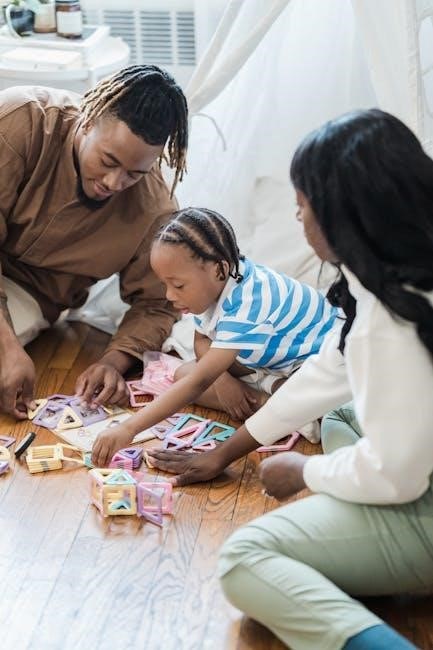
SFP’s core lies in parent skills training, youth life skills training, and family skills practice, delivered through a structured, interactive weekly class format.

Parent Skills Training
Parent skills training within the Strengthening Families Program is a crucial component, focusing on enhancing parenting approaches to positively influence youth development. Sessions involve presentations, engaging role-plays, and dynamic group discussions, all designed to build practical skills. Parents learn effective communication techniques, strategies for setting clear expectations, and methods for providing consistent discipline.

A key emphasis is placed on fostering a supportive and nurturing family environment. Parents explore ways to strengthen emotional connections with their children, promote positive self-esteem, and encourage healthy decision-making. The training equips parents with tools to navigate challenging behaviors and build resilience within their families. These interactive sessions aim to empower parents to confidently guide their children through adolescence and beyond, fostering strong, lasting relationships.
Youth Life Skills Training
Youth life skills training, a core element of the Strengthening Families Program, empowers adolescents with essential tools for navigating the complexities of growing up. These sessions focus on building self-confidence, improving communication skills, and developing healthy relationships. Crucially, youth learn refusal skills to resist negative peer pressure and make responsible choices.

Interactive learning methods, including role-playing and engaging discussions, create a safe space for exploration and skill practice. The curriculum addresses topics such as goal setting, problem-solving, and managing emotions. By fostering resilience and self-awareness, the program prepares youth to overcome challenges and thrive. This training aims to equip young people with the skills needed to lead fulfilling lives and contribute positively to their communities, promoting overall well-being.
Family Skills Practice
Family Skills Practice is a pivotal component of the Strengthening Families Program, designed to translate learned concepts into real-world application. Following separate parent and youth sessions, families convene to collaboratively practice newly acquired skills through engaging activities and games. This dedicated time fosters a supportive environment for strengthening family bonds and improving communication patterns.
Activities are intentionally designed to be interactive and enjoyable, encouraging participation from all family members. These sessions provide opportunities to practice effective communication techniques, resolve conflicts constructively, and reinforce positive family values. Through shared experiences and collaborative problem-solving, families build resilience and strengthen their ability to navigate challenges together, ultimately promoting a more harmonious and supportive home environment.
Weekly Class Structure & Format
The Strengthening Families Program’s weekly sessions follow a carefully structured format to maximize learning and engagement. Each class is typically divided into two distinct, yet complementary, segments. For the initial hour, parents and youth participate in separate groups, focusing on age-appropriate skill development. Parents delve into parenting skills and strategies, while youth concentrate on life and refusal skills.
Subsequently, families unite for a second hour dedicated to collaborative practice. This joint session involves interactive exercises, role-playing scenarios, and engaging family projects designed to reinforce the skills learned individually. Sessions are highly interactive, utilizing learning games and discussions to promote active participation and skill mastery, fostering a dynamic and supportive learning environment for all involved.

Specific Family Activities & Skill Building
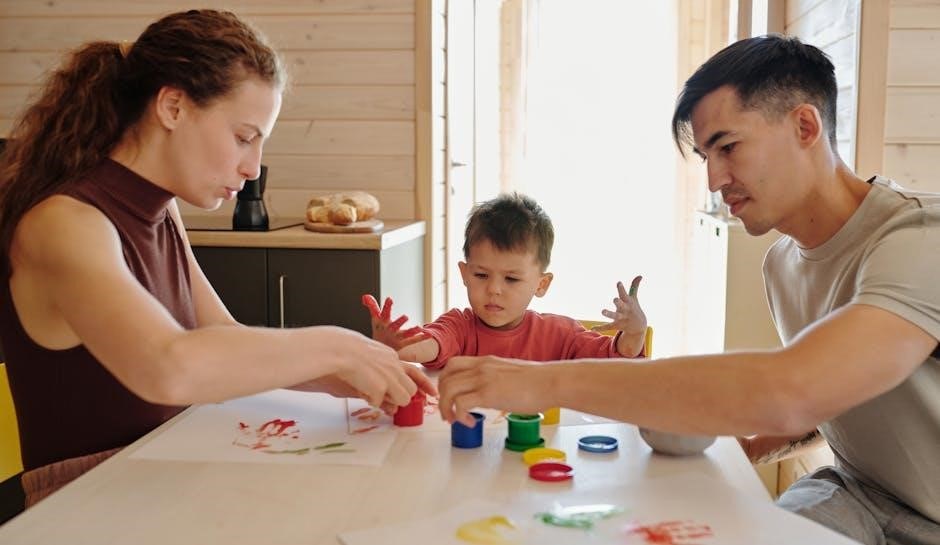
Family activities within the program center around supporting aspirations, appreciating each member, understanding core values, and enhancing communication skills for stronger relationships.
Supporting Goals and Dreams
A crucial component of the Strengthening Families Program involves actively supporting the individual goals and dreams of each family member, both youth and parents. This isn’t merely about acknowledging aspirations; it’s about fostering an environment where everyone feels empowered to pursue their passions and ambitions.
Activities focus on open communication, where family members share their dreams without fear of judgment. Parents learn techniques to encourage their children’s pursuits, offering constructive feedback and practical assistance. Youth, in turn, are guided to articulate their goals clearly and develop realistic plans to achieve them.
The program emphasizes the importance of celebrating successes, both big and small, reinforcing positive behaviors and building self-esteem. By actively supporting each other’s dreams, families strengthen their bonds and create a more positive and motivating home environment, leading to increased individual well-being and collective family resilience.
Appreciating Family Members
A cornerstone of the Strengthening Families Program is cultivating a culture of appreciation within the family unit. This goes beyond simple politeness; it’s about intentionally recognizing and valuing the unique qualities and contributions of each member. Activities are designed to help families express gratitude and acknowledge positive attributes.
Specific exercises involve sharing “appreciations” – specific instances where a family member demonstrated kindness, support, or a positive trait. These are often done during family meetings, creating a safe space for vulnerability and positive reinforcement. Parents learn to model appreciative behavior, verbally acknowledging their children’s efforts and achievements.
The program highlights that consistent expressions of appreciation strengthen family bonds, boost self-esteem, and create a more harmonious home environment. By focusing on the positive aspects of each family member, the SFP fosters a sense of belonging and mutual respect, contributing to overall family well-being.
Understanding Family Values
The Strengthening Families Program dedicates significant attention to identifying and clarifying core family values. This isn’t about imposing a specific set of beliefs, but rather facilitating a discussion where family members collaboratively define what principles are most important to them. Activities encourage open communication about beliefs regarding respect, responsibility, honesty, and compassion.
Families engage in exercises designed to pinpoint shared values and understand how these values influence their decisions and behaviors. This process often reveals both common ground and areas where individual perspectives differ, providing opportunities for constructive dialogue and compromise.
By articulating their values, families create a moral compass that guides their interactions and strengthens their collective identity. This shared understanding fosters a sense of unity and purpose, helping families navigate challenges and make choices aligned with their deeply held beliefs, ultimately building resilience.
Effective Family Communication
A cornerstone of the Strengthening Families Program is the development of effective communication skills within the family unit. Sessions actively teach techniques for active listening, where members truly hear and understand each other’s perspectives without interruption or judgment. Role-playing scenarios are frequently used to practice these skills in a safe and supportive environment.
The program emphasizes “I” statements, encouraging individuals to express their feelings and needs directly and respectfully, avoiding blame or accusatory language. Families learn to navigate difficult conversations constructively, resolving conflicts peacefully and strengthening their emotional connection.
Furthermore, SFP promotes regular family meetings as a dedicated space for open dialogue, problem-solving, and shared decision-making, fostering a climate of trust and mutual respect, vital for long-term family well-being.

Assessment & Measurement Tools
The program utilizes POCA-R, SSRS, the “What About You” Survey, and the FES to gauge program impact and family dynamics effectively.
Parent Observation of Children’s Activities (POCA-R)
The Parent Observation of Children’s Activities – Revised (POCA-R) serves as a crucial assessment tool within the Strengthening Families Program, providing valuable insights into a child’s behavioral patterns and activities. This observational measure allows parents to systematically record the types of activities their children engage in over a specified period, offering a detailed snapshot of their daily routines.
Specifically, POCA-R focuses on categorizing activities into distinct areas, such as prosocial behaviors, antisocial behaviors, and various leisure pursuits. By meticulously documenting these observations, parents and program facilitators gain a clearer understanding of a child’s strengths and areas where additional support might be beneficial. The data collected through POCA-R is instrumental in tailoring program interventions to meet the unique needs of each family and child, ultimately contributing to more effective outcomes.
Social Skills Rating System (SSRS)
The Social Skills Rating System (SSRS) is a multifaceted assessment tool employed within the Strengthening Families Program to evaluate a child’s behavioral and emotional functioning from multiple perspectives. Unlike solely relying on parental input, SSRS gathers ratings from parents, teachers, and the child themselves (depending on age and program version), providing a comprehensive view of social skills development.
This system assesses key areas such as social competence, conduct problems, and emotional reactivity. By comparing ratings across different sources, program staff can identify discrepancies and gain a more nuanced understanding of a child’s strengths and challenges in various settings. The SSRS data informs individualized intervention strategies, helping families address specific social-emotional needs and promote positive peer interactions, ultimately fostering healthier relationships and improved well-being.
What About You Survey
The “What About You” Survey serves as a crucial component within the Strengthening Families Program’s assessment toolkit, directly soliciting feedback from the youth participants themselves. This self-report measure provides valuable insights into the adolescent’s perspective on their own social experiences, emotional well-being, and perceived levels of support within their family and peer groups.
Unlike externally-rated assessments, this survey empowers young people to voice their feelings and experiences directly, offering a unique and often overlooked dimension to the evaluation process. Questions explore areas like peer influence, substance use attitudes, and overall life satisfaction. The data gathered helps program facilitators tailor interventions to address the specific needs and concerns of the youth, fostering a more responsive and impactful program experience, and promoting positive youth development.
Moos Family Environment Scale (FES)
The Moos Family Environment Scale (FES) is a widely-used, comprehensive instrument employed within the Strengthening Families Program to assess the systemic dynamics of family life. This multi-faceted tool evaluates key dimensions of the family environment, including cohesion, expressiveness, conflict, intellectual-cultural orientation, active-recreational orientation, and control.
Administered to family members, the FES provides a holistic understanding of how individuals perceive their family’s functioning. Data collected helps identify areas of strength and potential challenges within the family system. This information is invaluable for tailoring program interventions to address specific family needs, promoting healthier communication patterns, and fostering a more supportive and nurturing home environment. Ultimately, the FES contributes to a more targeted and effective approach to strengthening family relationships.

Program Implementation & Accessibility
SFP is broadly available through Purdue Extension and Washington State University programs, offering families accessible resources and skills classes for enhanced well-being.
Purdue Extension Health and Human Sciences Programs
Purdue Extension actively delivers a diverse range of family-focused programs through its Health and Human Sciences Educators, aiming to strengthen families across Indiana communities. While specific details regarding the Strengthening Families Program (SFP) availability may vary by county, Purdue Extension consistently prioritizes family well-being initiatives.
Families interested in accessing SFP or related programming are encouraged to directly contact their local Purdue Extension office. Educators can provide information on upcoming workshops, resources, and tailored support to meet individual family needs.
Beyond SFP, Purdue Extension offers numerous programs addressing parenting skills, child development, financial literacy, and healthy relationships, all contributing to a more resilient and thriving family ecosystem. For a comprehensive overview of available family programming options, reaching out to your county’s Extension office is the most effective approach.
Washington State University – Whatcom County Programs

Washington State University (WSU) Whatcom County actively presents the Strengthening Families Program (SFP), designed for families seeking guidance in nurturing youth and enhancing children’s skills. This program specifically targets families with youth aged 10-14, offering a structured approach to building stronger family dynamics.
Key family activities within the WSU Whatcom County SFP include supporting goals and dreams, cultivating appreciation for family members, establishing a shared understanding of family values, utilizing effective family meetings, and improving family communication to achieve collective goals.
WSU’s commitment extends to providing accessible resources and support for families. The program emphasizes interactive learning and skill development, creating a positive environment for growth and connection; Interested families are encouraged to contact WSU Whatcom County directly for program schedules and enrollment details.