
This manual details operation for Black & Decker Smart Chargers‚ including trolling charger models․ It covers several pages of instructions‚ ensuring optimal battery performance and longevity․
What is a Smart Battery Charger?
A smart battery charger‚ like the Black & Decker models covered‚ utilizes advanced technology to optimize the charging process․ Unlike traditional chargers‚ it monitors battery voltage and current‚ adjusting the charge accordingly․ This prevents overcharging‚ extending battery life and ensuring safety․
These chargers often feature multiple charging modes‚ including standard‚ fast‚ and maintenance/float modes‚ catering to diverse battery needs․ They also incorporate LED indicators to display charging status and potential errors‚ providing users with clear feedback․
Models Covered in this Manual
This comprehensive manual applies to a range of Black & Decker smart battery chargers‚ including those designed for trolling motors and general-purpose battery maintenance․ Specifically‚ it addresses models like the 28;71323‚ a 12V battery charger with engine starting capabilities․
While a complete list isn’t provided‚ the instructions are generally applicable to similar Black & Decker smart chargers‚ ensuring broad usability․ Refer to the model number on your charger for specific compatibility․

Safety Instructions
Always read and follow all safety rules and operating instructions before using your BLACK&DECKER charger․ Never replace the unit with a standard plug․
General Safety Warnings
Exercise extreme caution when working with lead-acid batteries․ They contain corrosive acid and can produce explosive gases․ Always charge batteries in a well-ventilated area‚ avoiding flames or sparks․ Wear appropriate eye protection and gloves․ Do not smoke or permit open flame near the battery during charging․ Ensure the charger is disconnected from the power source before making any connections or disconnections to the battery․ Improper connections can cause short circuits and potential hazards․
Specific Charger Safety Precautions
Never attempt to modify or disassemble the Black & Decker charger․ Do not use the charger if the cord or plug is damaged․ Avoid exposing the charger to rain or moisture․ Only use the charger for its intended purpose – charging compatible batteries․ Do not operate the charger near flammable liquids or gases․ Always unplug the charger before cleaning or performing maintenance․ Never replace the charger with a standard mains plug․
Charger Components & Features
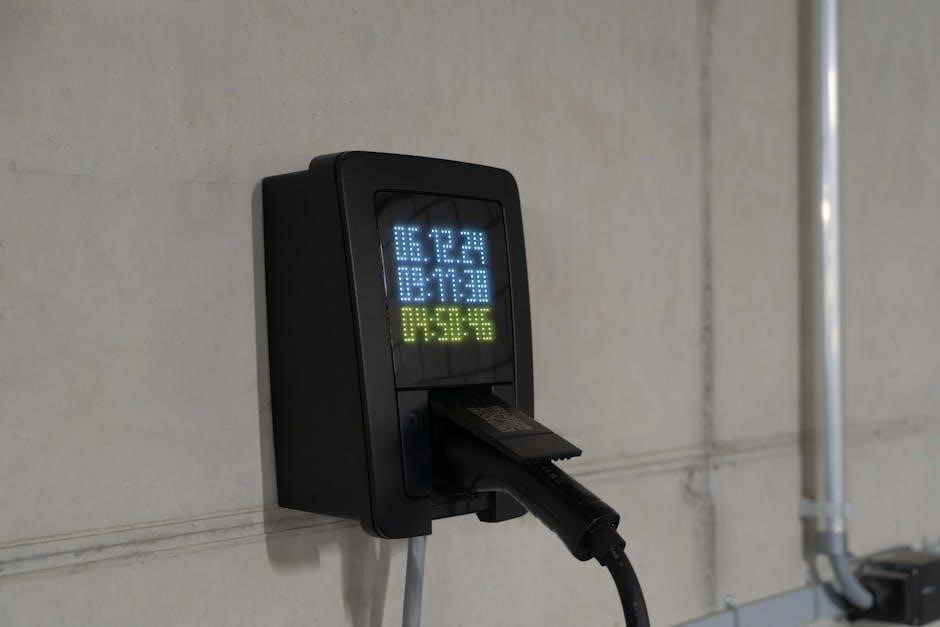
This section identifies all parts of the Black & Decker Smart Charger‚ detailing their function and importance for safe and effective battery charging operations․
Identifying the Parts
Familiarize yourself with the charger’s components before use․ Key parts include the AC input plug‚ connecting cables with clamps (typically red for positive and black for negative terminals)‚ and the charger casing itself․ The LED indicator panel displays charging status․ Some models feature built-in engine starting capabilities‚ adding to their versatility․ Ensure all connections are secure before initiating the charging process‚ and always refer to the diagrams provided within this manual for precise component locations․
LED Indicator Lights Explained
The LED lights communicate the charger’s status․ A solid red light typically indicates charging is in progress‚ while a flashing red light may signal an error or improper connection․ A solid green light usually confirms a fully charged battery․ Refer to the specific model’s diagram for precise interpretations‚ as light sequences can vary․ Understanding these indicators is crucial for monitoring the charging process and troubleshooting potential issues effectively․

Operating Instructions
Proper use involves preparing the battery‚ securely connecting the charger‚ and carefully monitoring the charging process․ Always follow safety guidelines for optimal results․
Preparing the Battery for Charging
Before connecting to the charger‚ inspect the battery for any physical damage‚ such as cracks or leaks․ Clean any corrosion from the battery terminals using a wire brush or a solution of baking soda and water‚ ensuring it’s thoroughly rinsed and dried․ Verify the battery voltage matches the charger’s specifications; Ensure the battery is in a well-ventilated area during charging‚ away from flammable materials․ A fully discharged battery may take longer to initially recognize by the smart charger․
Connecting the Charger to the Battery
Always connect the charger clips to the battery terminals before plugging the charger into a power outlet․ Attach the positive (red) clip to the positive terminal and the negative (black) clip to the negative terminal․ Ensure a secure connection to avoid sparking․ Double-check polarity; reversed connections can damage both the charger and the battery․ Never attempt to modify the charger’s plug to bypass safety features․
Charging Process & Monitoring
Once connected‚ the charger will automatically begin the charging process‚ indicated by the LED lights․ Monitor the LED indicators to track charging status – typically showing charging‚ nearly full‚ and maintenance modes․ Do not interrupt the charging cycle unless absolutely necessary․ Allow the charger to complete its cycle for optimal battery conditioning․ Avoid operating the device during charging․

Charging Modes & Settings
Black & Decker Smart Chargers often feature standard‚ fast‚ and maintenance/float charging modes․ Selection depends on battery condition and desired charging speed․
Standard Charging Mode
This mode provides a safe and complete charge for most battery types․ It’s ideal for routinely replenishing battery power without rushing the process․ The charger carefully monitors the battery’s voltage and current‚ adjusting the charge rate as needed to prevent overcharging․
Standard charging is generally the recommended setting for regular use‚ extending battery lifespan․ Expect a longer charging time compared to fast charge options‚ but with enhanced battery health benefits․ It’s a reliable choice for consistent performance․
Fast Charging Mode (if applicable)
If your Black & Decker Smart Charger features a fast charging mode‚ it delivers a quicker battery replenishment․ This mode utilizes a higher current output‚ significantly reducing charging time compared to standard mode․ However‚ be aware that frequent use of fast charging may slightly reduce long-term battery lifespan․
Monitor the charging process closely when using this mode․ It’s best suited for situations where a rapid charge is necessary‚ but standard charging is preferred for routine maintenance․
Maintenance/Float Charging Mode
The Maintenance or Float Charging Mode is designed for batteries that are fully charged and infrequently used․ This mode provides a small‚ continuous charge to counteract the natural self-discharge rate of the battery‚ keeping it at peak capacity․
It prevents sulfation and extends battery life‚ ideal for seasonal equipment․ Leaving a battery on float charge for extended periods is generally safe and recommended for optimal performance․

Troubleshooting
If the charger fails to operate or the battery doesn’t charge‚ consult the LED indicator lights for error codes and potential solutions․
Charger Not Turning On
If your Black & Decker smart charger isn’t powering on‚ first verify the AC power source is functioning correctly․ Ensure the power cord is securely plugged into both the charger and a working outlet․ Inspect the cord for any visible damage‚ like cuts or fraying․
If the outlet is confirmed working and the cord is intact‚ there might be an internal fuse issue within the charger itself – do not attempt to repair this yourself․ Contact customer support for assistance‚ as opening the unit voids the warranty․
Battery Not Charging
If the charger powers on but the battery isn’t receiving a charge‚ confirm a secure connection between the charger clips and the battery terminals․ Ensure proper polarity – red to positive (+)‚ black to negative (-)․ A poor connection is a common cause․
Also‚ verify the battery is a compatible type (see ‘Battery Compatibility’ section)․ A severely discharged or damaged battery may also fail to charge; test with a different battery if possible․
LED Indicator Errors & Solutions
Specific LED flash patterns signal potential issues․ Consult the ‘LED Indicator Lights Explained’ section for a detailed breakdown of each code․ A rapidly flashing red light often indicates reversed polarity – immediately disconnect and correct the connection․
A solid red light may signify a battery that won’t accept a charge due to damage․ If an unusual pattern occurs not listed in the manual‚ discontinue use and contact customer support․

Technical Specifications
The charger features varying input and output voltages/currents‚ ranging from 1000W to 8000W‚ depending on the specific model and power requirements․
Input Voltage & Current
The Black & Decker Smart Battery Charger is designed to operate with standard household electrical systems․ Typically‚ the input voltage is 120V AC‚ 60Hz‚ though some models may accommodate a broader voltage range for international use․ Input current draw varies significantly based on the charging mode and battery condition‚ ranging from a minimal standby current to a peak of several amps during fast charging․ Always verify the input voltage printed on the charger’s label matches your local power supply to prevent damage and ensure safe operation․ Incorrect voltage can lead to malfunction or pose a safety hazard․
Output Voltage & Current
The Black & Decker Smart Battery Charger delivers a regulated DC output‚ primarily 12V or 6V‚ depending on the selected charging mode and battery type․ Output current dynamically adjusts based on the battery’s state of charge‚ starting with a higher current for rapid initial charging and tapering down as the battery nears full capacity; Maximum output current typically ranges from 2A to 10A‚ ensuring efficient and safe charging․ Monitoring the output is crucial; excessive current can damage the battery‚ while insufficient current prolongs charging time․

Battery Compatibility
This charger supports various battery types‚ including lead-acid‚ AGM‚ and gel cell batteries․ It accommodates a wide battery capacity range for diverse applications․
Supported Battery Types
The Black & Decker Smart Battery Charger is designed for compatibility with a broad spectrum of battery technologies․ Primarily‚ it supports standard Lead-Acid batteries commonly found in automotive and marine applications․ Furthermore‚ it effectively charges Absorbed Glass Mat (AGM) batteries‚ known for their spill-proof design and enhanced vibration resistance․
Gel Cell batteries‚ offering similar benefits to AGM but with a gelled electrolyte‚ are also fully supported․ Ensure your battery falls within these types for optimal charging and to avoid potential damage․
Battery Capacity Range
This Black & Decker Smart Charger accommodates a wide range of battery capacities‚ ensuring versatility for various applications․ It effectively manages batteries from a minimum capacity of 4․5 Amp-hours (Ah)‚ suitable for smaller power tool batteries and recreational vehicles․
The charger extends its support up to a maximum capacity of 160 Ah‚ catering to larger automotive‚ marine‚ and deep-cycle battery systems․ Always verify your battery’s Ah rating to ensure compatibility and optimal charging performance․
Maintenance & Storage
Regular cleaning keeps the charger functioning optimally․ Store in a cool‚ dry place‚ avoiding extreme temperatures and humidity for prolonged lifespan․
Cleaning the Charger
To ensure reliable operation and extend the life of your Black & Decker Smart Battery Charger‚ periodic cleaning is essential․ Always disconnect the charger from both the battery and the power outlet before commencing any cleaning procedures․ Use a dry cloth to wipe down the exterior casing‚ removing any dust or debris that may have accumulated․
Avoid using water or solvents‚ as these can damage the internal components․ For stubborn dirt‚ a slightly damp cloth may be used‚ but ensure the charger is completely dry before reconnecting it․ Do not attempt to disassemble the charger for cleaning purposes‚ as this will void the warranty and could pose a safety hazard․
Proper Storage Conditions
When not in use‚ store your Black & Decker Smart Battery Charger in a cool‚ dry environment․ Avoid locations exposed to extreme temperatures‚ humidity‚ or direct sunlight‚ as these conditions can degrade the charger’s performance and lifespan․ Ideally‚ store the charger indoors‚ away from water and dust․
Ensure the power cord is neatly coiled and secured to prevent damage․ Do not store the charger with the battery still connected․ Keep the charger out of reach of children and pets to prevent accidental misuse or damage․ Proper storage ensures readiness when needed․
Warranty Information
Black & Decker provides warranty coverage details for the Smart Battery Charger․ To initiate a claim‚ follow the specified procedures outlined in the accompanying documentation․
Warranty Coverage Details
The Black & Decker Smart Battery Charger warranty typically covers defects in materials and workmanship for a specified period from the date of purchase․ This coverage doesn’t include damage resulting from misuse‚ accidents‚ unauthorized repairs‚ or normal wear and tear․
The warranty period varies by model and region‚ so retain your proof of purchase․ Specifically‚ it protects against manufacturing flaws impacting functionality‚ ensuring a reliable charging experience․ Always refer to the official warranty statement included with your charger for precise terms and conditions․
How to Claim Warranty
To initiate a warranty claim for your Black & Decker Smart Battery Charger‚ retain your original purchase receipt as proof of date and location․ Contact Black & Decker’s customer service department – details are usually found within the product’s documentation or on their official website․
You may need to provide the model number and a description of the defect․ Be prepared to potentially ship the charger for inspection and possible repair or replacement․

Frequently Asked Questions (FAQ)
Refer to the manual for LED light meanings and battery compatibility․ Do not charge different battery types with this charger; it’s designed for specific applications․
Can I charge different types of batteries?
It is crucial to only use your BLACK+DECKER charger with the battery specifically designed for the appliance it powers․ Attempting to charge incompatible battery types could lead to damage‚ reduced battery life‚ or even a potential safety hazard․ The charger is optimized for a specific voltage and chemistry‚ and deviating from this can cause irreversible issues․ Always consult the battery and charger documentation to confirm compatibility before initiating a charge cycle‚ ensuring safe and efficient operation․
What do the LED lights mean?
The LED indicator lights provide crucial information about the charging process․ Different colors and flashing patterns signify various states – charging‚ fully charged‚ or potential errors․ Refer to the ‘LED Indicator Lights Explained’ section within this manual for a detailed breakdown of each signal․ Understanding these indicators allows you to monitor the battery’s progress and quickly identify any issues that may arise during charging‚ ensuring optimal performance and safety․