
Article Plan: Starting Out with Python 6th Edition PDF
This article details accessing the “Starting Out with Python” 6th Edition, covering PDF options, legality, core concepts, and supplemental resources for learners.
Today is 11/29/2025 15:00:48 ()
“Starting Out with Python” by Tony Gaddis is a popular introductory text, with the 6th edition offering updated content and a focus on problem-solving skills.
Today is 11/29/2025 15:00:48 ()
Overview of the Textbook
“Starting Out with Python,” 6th Edition, serves as a comprehensive introduction to programming using the Python language. The textbook meticulously guides beginners through fundamental concepts, emphasizing a clear and accessible approach. It covers a broad spectrum of topics, starting with the basics of computers and programming, and progressing to more advanced concepts like functions and data structures.
Readers can expect a structured learning path, reinforced by numerous examples and exercises. The book’s content is designed to build a strong foundation in programming logic and problem-solving. Discussions around accessing the 6th edition often involve seeking PDF versions, though legality and ethical considerations are paramount. The text aims to equip students with the skills needed for further study or practical application in various fields.
Today is 11/29/2025 15:00:48 ()
Tony Gaddis is a highly respected author in the introductory programming textbook space, known for his clear and student-friendly writing style. His approach, evident in “Starting Out with Python” 6th Edition, prioritizes building a solid understanding of fundamental concepts before moving to more complex topics. Gaddis emphasizes real-world applications and problem-solving, making the learning process more engaging.
He focuses on step-by-step explanations and abundant examples, catering specifically to beginners. Discussions surrounding the PDF version of the book often highlight its value as a learning resource due to Gaddis’s pedagogical methods. His textbooks, including this edition, are widely adopted in introductory programming courses, reflecting his effectiveness in teaching the core principles of computer science.
Today is 11/29/2025 15:00:48 ()
Target Audience: Beginners and Programming Students
“Starting Out with Python” 6th Edition is primarily designed for individuals with little to no prior programming experience. It serves as an excellent introductory text for those embarking on their coding journey, offering a gentle learning curve and foundational knowledge. The book is also well-suited for students enrolled in introductory computer science courses at the high school or college level.
The textbook’s accessibility makes it ideal for self-learners seeking to acquire Python skills. Discussions about the PDF version often center on its convenience for students needing offline access to course materials. Gaddis’s approach caters to diverse learning styles, ensuring comprehension for a broad range of beginners and aspiring programmers.
Today is 11/29/2025 15:00:48 ()

Key Features of the 6th Edition
The 6th edition boasts updated syntax, enhanced problem-solving exercises, and improved code examples, providing a modern and effective Python learning experience.
Today is 11/29/2025 15:00:48 ()
Updated Python Syntax and Libraries
The 6th Edition of “Starting Out with Python” reflects the evolving landscape of the Python programming language. It incorporates the latest Python syntax, ensuring students learn current best practices and avoid outdated methods. This update is crucial as Python undergoes regular improvements and new features are introduced.
Furthermore, the textbook integrates coverage of frequently used and recently updated Python libraries. This allows learners to immediately apply their knowledge to real-world projects and tasks. The inclusion of modern libraries enhances the practical value of the material, preparing students for professional development and further study. Access to current tools is vital in today’s rapidly changing tech environment.
Today is 11/29/2025 15:00:48 ()
Enhanced Problem-Solving Focus
“Starting Out with Python,” 6th Edition, places a significant emphasis on developing strong problem-solving skills in students. The textbook moves beyond simply teaching syntax, actively encouraging learners to think critically and apply programming concepts to solve diverse challenges.
This edition features a greater number of exercises and projects designed to test and refine problem-solving abilities. These aren’t just coding tasks; they require students to analyze situations, design algorithms, and implement solutions effectively. The book’s approach fosters a deeper understanding of programming logic and prepares students for tackling complex real-world problems. It’s about learning how to program, not just what to program.

Today is 11/29/2025 15:00:48 ()
Improved Code Examples and Exercises
The 6th Edition of “Starting Out with Python” boasts significantly refined code examples and a broader range of exercises, enhancing the learning experience. Examples are updated to reflect best practices and modern Python conventions, making them clearer and more relatable for beginners.
Exercises are designed with varying difficulty levels, catering to diverse learning paces and skill sets; Many incorporate real-world scenarios, bridging the gap between theoretical knowledge and practical application. The increased quantity and quality of exercises allow for more thorough practice and reinforcement of concepts. Students can solidify their understanding through hands-on coding, building confidence and proficiency.
Today is 11/29/2025 15:00:48 ()

Accessing the 6th Edition PDF
Obtaining the “Starting Out with Python” 6th Edition PDF involves official purchase options, awareness of download legality, and caution regarding potential online risks.
Today is 11/29/2025 15:00:48 ()
Official Purchase Options (Pearson Website)

Pearson, the official publisher, offers several avenues to legally acquire the “Starting Out with Python” 6th Edition. The Pearson website provides options for purchasing the physical textbook, an eText version, or access to the MyLab Programming platform, which often includes the eText.
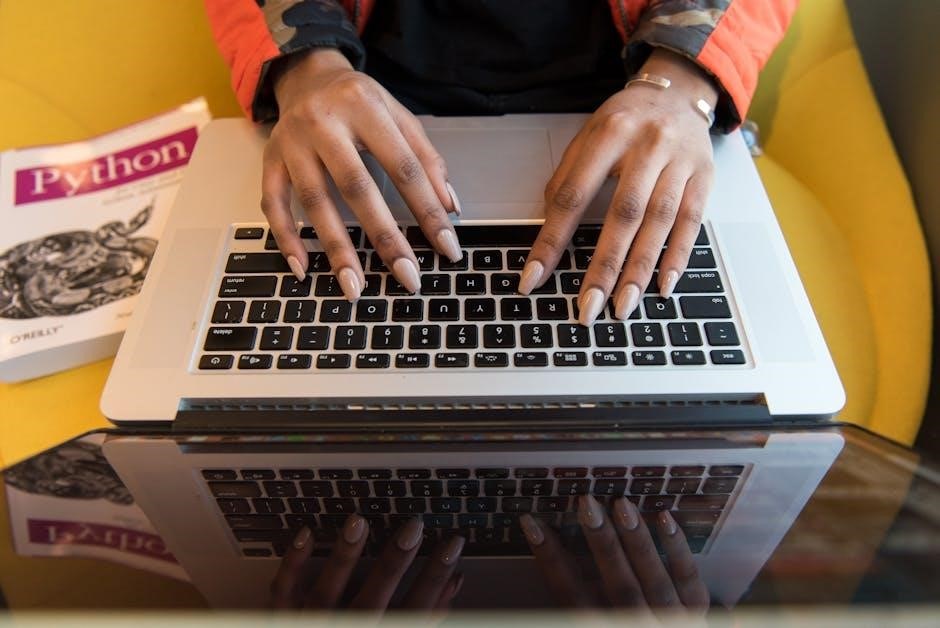
These official channels guarantee access to the complete and accurate content, ensuring a reliable learning experience. Purchasing directly from Pearson supports the author and ensures you receive any updates or errata.
Beware of significantly discounted offers from unofficial sources, as these may be pirated or incomplete copies. Pearson frequently runs promotions and offers bundled packages, so checking their website regularly is advisable. Consider rental options for the eText to reduce costs if a permanent copy isn’t necessary.
Today is 11/29/2025 15:00:48 ()
Legality and Ethics of PDF Downloads
Downloading a PDF of “Starting Out with Python” 6th Edition from unofficial sources is generally illegal and unethical. Copyright laws protect the author and publisher, Pearson, granting them exclusive rights to distribute their work. Unauthorized downloads constitute copyright infringement, potentially leading to legal consequences.
Beyond the legal ramifications, consider the ethical implications. Authors rely on textbook sales for income and to continue creating educational materials.
Supporting authors and publishers through legitimate purchases ensures the continued availability of high-quality learning resources. Seeking free PDF versions undermines this system. Opting for official purchase options, even eText rentals, demonstrates respect for intellectual property and supports the educational community.
Today is 11/29/2025 15:00:48 ()

Potential Risks of Unofficial Downloads (Malware, Viruses)
Downloading the “Starting Out with Python” 6th Edition PDF from unverified websites carries significant security risks. These sites often bundle malware, viruses, and other malicious software with the desired file, compromising your device and data.
Such downloads can lead to identity theft, financial loss, and system instability. Malware can steal personal information, encrypt files for ransom, or turn your computer into part of a botnet.
Even seemingly harmless files can contain hidden threats. Protect yourself by exclusively obtaining the textbook through official channels like the Pearson website. Prioritize your digital safety and avoid the temptation of free, but potentially dangerous, downloads.
Today is 11/29/2025 15:00:48 ()
Core Concepts Covered in the Textbook
The textbook systematically covers fundamental programming concepts, including input/output, decision structures, repetition, and functions, building a strong Python foundation.
Today is 11/29/2025 15:00:48 ()
Chapter 1 of “Starting Out with Python” 6th Edition lays the groundwork for understanding the digital world. It begins by defining computers and their core components – hardware and software – explaining how they process information. The chapter delves into the history of computing, tracing its evolution from early calculating devices to modern systems.
Students learn about different types of programming languages, including high-level languages like Python, and the role of compilers and interpreters. Crucially, it introduces the concept of algorithms – step-by-step procedures for solving problems – and emphasizes the importance of logical thinking in programming. This foundational chapter prepares readers for the practical coding exercises that follow, establishing a solid base for future learning.
Today is 11/29/2025 15:00:48 ()
Chapter 2: Input, Processing, and Output
“Starting Out with Python” 6th Edition’s Chapter 2 focuses on the fundamental cycle of computer operations: input, processing, and output; It explains how programs receive data (input) from various sources, like the keyboard or files. The chapter then details how this data is manipulated (processing) using Python’s operators and expressions.
Students learn about data types – integers, floats, strings – and how to perform calculations and operations on them. Finally, it covers how programs present results (output) to the user, utilizing functions like print; Practical examples demonstrate how to write simple programs that take input, perform calculations, and display the output, solidifying understanding of this core programming concept.
Today is 11/29/2025 15:00:48 ()
Chapter 3: Decision Structures and Boolean Logic
Chapter 3 of “Starting Out with Python” 6th Edition introduces decision structures, enabling programs to execute different code blocks based on conditions. This chapter explores if, elif, and else statements, allowing for branching logic.
Crucially, it delves into Boolean logic – and, or, and not – which forms the basis of these conditions. Students learn to construct complex Boolean expressions to control program flow. The textbook provides numerous examples demonstrating how to use these structures to solve problems requiring conditional execution, like checking user input or determining program outcomes. Understanding these concepts is vital for creating dynamic and responsive Python programs.
Today is 11/29/2025 15:00:48 ()
Chapter 4: Repetition Structures
Chapter 4 of “Starting Out with Python” 6th Edition focuses on repetition structures, essential for automating repetitive tasks within programs. This section thoroughly covers for and while loops, detailing their syntax and practical applications.
Students learn how to control loop execution using techniques like loop counters and conditional breaks. The textbook emphasizes the importance of avoiding infinite loops and provides strategies for debugging them. Numerous examples illustrate how repetition structures can simplify code and efficiently process large datasets. Mastering these concepts is crucial for building programs that can handle complex, iterative processes, a cornerstone of effective Python programming.
Today is 11/29/2025 15:00:48 ()
Chapter 5: Functions
Chapter 5 of “Starting Out with Python” 6th Edition introduces the fundamental concept of functions – reusable blocks of code designed to perform specific tasks. The textbook explains how to define functions, pass arguments, and return values, promoting modularity and code organization.
Students learn about the benefits of using functions, including reducing code duplication and improving readability. Detailed examples demonstrate how to create functions for various purposes, from simple calculations to complex operations. The chapter also covers the scope of variables within functions and the importance of proper function documentation. Understanding functions is vital for writing well-structured and maintainable Python programs.
Today is 11/29/2025 15:00:48 ()
Chapter 6: Further Discussion of Functions

Building upon Chapter 5, Chapter 6 of “Starting Out with Python” 6th Edition delves deeper into the intricacies of functions, exploring advanced concepts and techniques. This section likely expands on topics like function recursion, where a function calls itself to solve a problem, and higher-order functions, which treat functions as first-class objects.
The textbook probably covers more complex parameter passing mechanisms and explores the use of lambda functions for concise, anonymous function definitions. Students will likely encounter discussions on function design principles, emphasizing clarity, efficiency, and maintainability. Mastering these advanced function concepts is crucial for developing sophisticated and scalable Python applications.
Today is 11/29/2025 15:00:48 ()

Finding Solutions Manuals and Supplemental Materials
Locating solution manuals and extra resources enhances learning; online forums and communities offer support for “Starting Out with Python” 6th Edition students.
Today is 11/29/2025 15:00:48 ()
Availability of Solution Manuals for the 6th Edition
Finding a solution manual for “Starting Out with Python” 6th Edition can be challenging, as official versions are often restricted to instructors. However, several online platforms, like Docsity, claim to offer solutions, though their legality and reliability should be carefully considered.
Students frequently seek these manuals to check their work and deepen their understanding of the concepts presented in the textbook. While helpful, relying solely on solutions without attempting problems independently hinders the learning process.
Be cautious of websites offering free downloads, as these may contain malware or viruses. Always prioritize official resources or reputable educational platforms when searching for supplemental materials.
Today is 11/29/2025 15:00:48 ()
Online Resources for Python Learning (Beyond the Textbook)
Supplementing “Starting Out with Python” with online resources greatly enhances the learning experience. Numerous platforms offer interactive tutorials, coding challenges, and comprehensive documentation;
Websites like Codecademy, Coursera, and edX provide structured Python courses for beginners, often featuring video lectures and hands-on projects. YouTube channels dedicated to Python programming offer a wealth of free tutorials and explanations.
Official Python documentation serves as an invaluable reference for syntax and library functions. Online forums, such as Stack Overflow, foster a supportive community where learners can ask questions and receive assistance from experienced programmers.
Today is 11/29/2025 15:00:48 ()
Utilizing Online Forums and Communities for Support
Navigating “Starting Out with Python” can be smoother with the support of online communities. Forums provide a space to ask questions, share code, and learn from others’ experiences.
Stack Overflow is a premier Q&A site for programming issues, offering solutions to common Python challenges. Reddit’s r/learnpython is a vibrant community for beginners, providing encouragement and guidance.
Dedicated Discord servers and online study groups offer real-time interaction with fellow learners. These platforms allow for collaborative problem-solving and the exchange of helpful resources, supplementing the textbook’s content. Engaging with these communities accelerates learning and builds confidence.
Today is 11/29/2025 15:00:48 ()